Visibility: Why Getting seen doesn’t always mean a full schedule.

I've had so many conversations with business owners that go some version of this:
"I'm showing up. I'm posting, doing community events, hosting webinars, literally all the things. But I'm just not getting the clients I want, and I don't know what I'm missing."
And my first question is almost never about what they're doing for visibility. It's about what happens after.
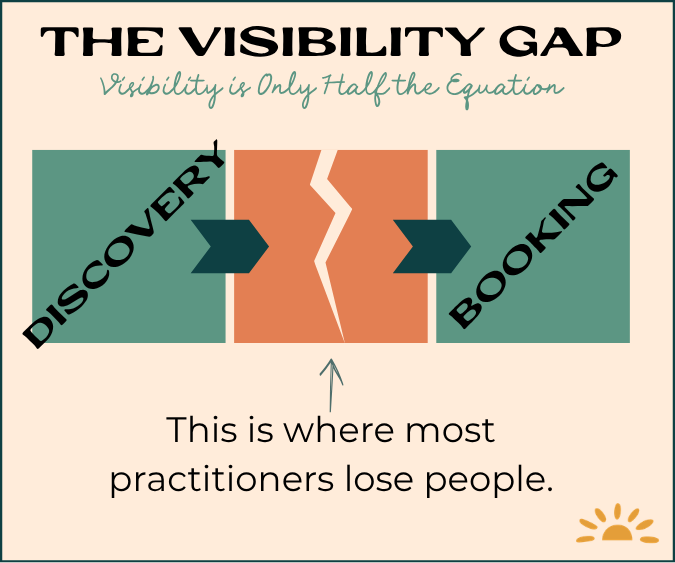
Because visibility is only part of the equation. A lot of business owners are getting seen, people are responding to their content, showing up for their events, and saying all the right things, yet the schedule is still inconsistent. When that happens, the natural instinct is to start questioning everything: the price, the offer, and whether you need to be doing more across the board. Sometimes those things are worth revisiting. But more often, the gap lies between when someone finds you and when they decide to book.
Think about how attention works. Someone scrolls past your post, feels something, maybe even saves it, and then their day takes over, and they forget about it entirely. That's not a reflection of how good your content is or how much they needed what you offer. It's just what happens when there's nothing in place to hold that moment. Most people who find you aren't going to book the same day, and if the only thing you have is social media, the algorithm moves on before they ever get the chance to come back to you.
So what needs to sit behind your visibility for it to convert?
Visibility Is Only Half the Equation.
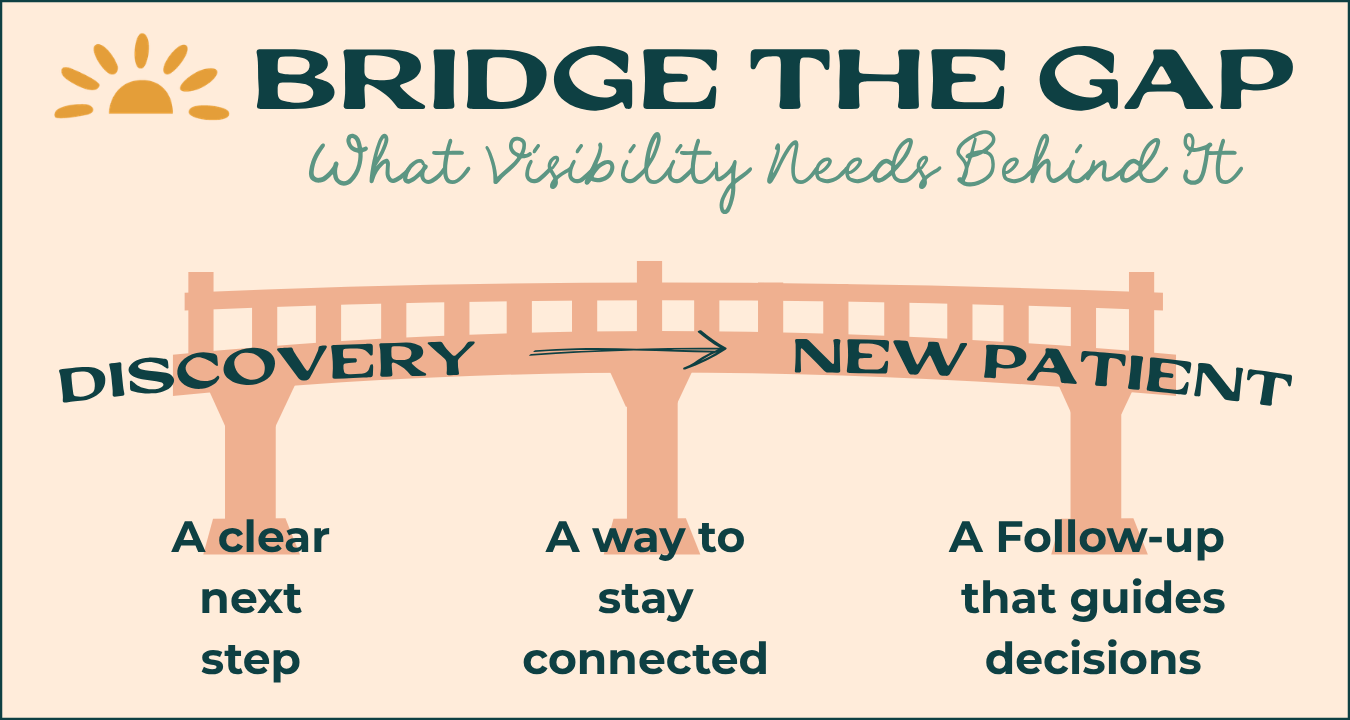
A next step that connects to what drew them in
Every piece of content, every event, every conversation you have can point somewhere specific. Not just "follow me on Instagram" or "check out my website," but somewhere that makes sense for where that person already is. And that next step doesn't have to be a booking — it can be, but the goal is also to capture their name and email so you have a way to follow up regardless of whether they're ready right now.
If you're hosting community events or participating in external events, do you have something to offer people in exchange for that information? A quiz, a free resource, a coupon for their first visit — something that gives them a reason to hand it over. Same thing on your website.
Once you have it, an email sequence can do much of the heavy lifting: providing value, sharing stories they can see themselves in, highlighting testimonials, and naturally leading them toward booking an appointment, scheduling a call, or buying whatever the next step is for you. The closer all of that connects to what drew them in the first place, the easier it is for them to keep moving forward.
Staying in front of the people who aren't ready yet
Most people who find you are not going to book the same day, and that's completely normal. Some are still in research mode, some need a little more time to feel confident in their decision, and some genuinely want to book, but life gets in the way, and they just never circle back.
Social media alone can't hold onto those people because the algorithm moves on, and so do they. Email is different. When someone is on your list, you have a direct line to them that doesn't depend on when they're scrolling.
A short newsletter once or twice a month keeps you present and relevant for the person who found you three weeks ago, fully intended to follow up, and just got busy. When they're finally ready to make a move, you're already there.
Following up without feeling like you're chasing someone
This is the piece that gets skipped most often, and usually for an understandable reason. Following up feels uncomfortable. You don't want to come across as pushy or bother someone who may have moved on. So the email doesn't get sent, the inquiry sits unanswered, and the connection just fades.
But silence from someone usually isn't a no. More often, it's just life getting in the way, and a simple, low-pressure touchpoint is all it takes to bring them back into the conversation. A short email sequence after someone opts in, a friendly check-in with someone who inquired but never booked, an occasional re-engagement note to your list — none of that is pushy. It's just making sure the people who were interested enough to raise their hand don't slip away before the timing is right for them.
A quick gut-check
If you're not sure where things are breaking down, answer these questions below.
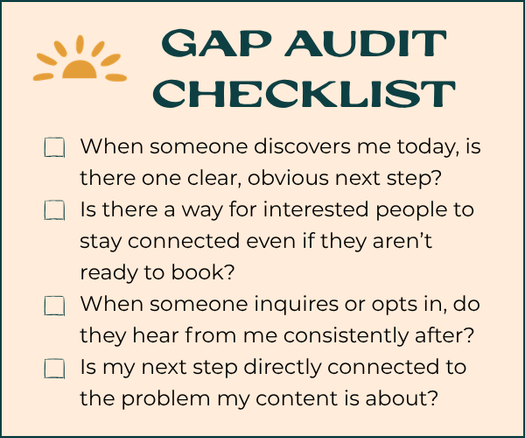
When someone finds you today, is there one clear place for them to go next?
Are you capturing names and emails so you can stay in touch beyond social media? (think email or text)
When someone opts in or reaches out, do they keep hearing from you, or does it go quiet?
Does your follow-up connect to what brought them to you in the first place, or is it generic?
If any of those gave you pause, that's probably where things could be leaking. And the encouraging part is that you're already doing the hardest part to manufacture. You're showing up, people are responding, and that means the foundation is there. What's missing is just the structure that lets all of that visibility go somewhere.
The foundation is already there
If people are responding to your content, showing up to your events, and telling you you're exactly what they need, that's nothing. That's the hardest part. The work is good, and the message is connecting, so the answer isn't to do more or show up more. It's to make sure the people who find you have a clear path to follow and that you stay in front of them long enough for the timing to work out.
If you want a second set of eyes on your email sequences, your lead capture, or just the overall flow of how you're bringing people in, that's exactly the kind of thing I dig into with practitioners. Schedule an expansion call, and we’ll figure out where you could close a gap and open an opportunity!